
A Neighborhood With a Newer Name and an Older Story
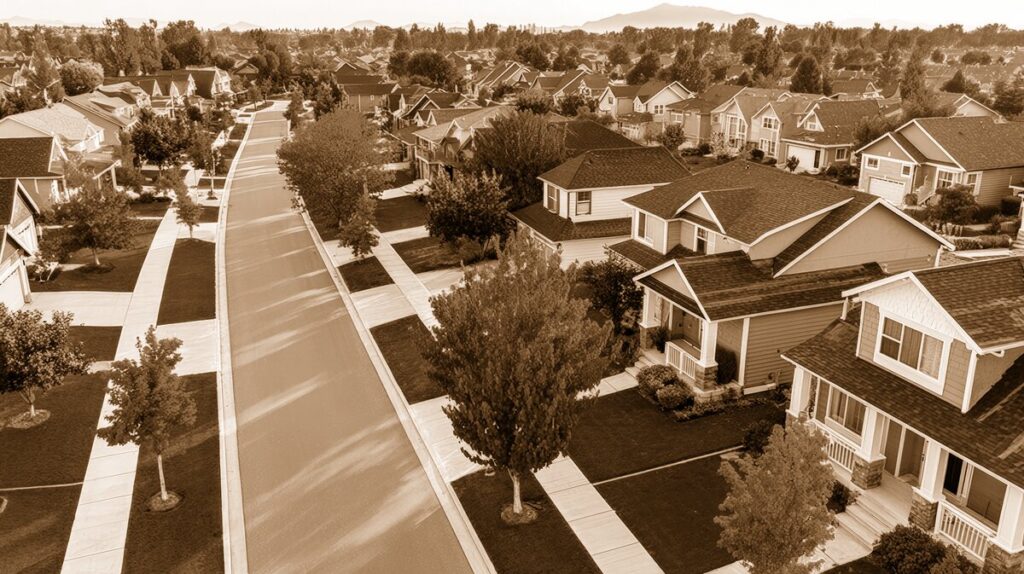
Ventura is one of those Highlands Ranch neighborhoods that can feel thoroughly established while still being part of a relatively young community. Its streets—among them Monterey Place, Laguna Circle, Bermuda Run Circle, Yale Lane, Princeton Circle, Collegiate Drive, and Ashburn Lane—are filled with mature landscaping, long-settled homes, and the easy routines of daily life. Yet beneath that familiar suburban character is a much older story: the transformation of open ranchland into one of Colorado’s best-known master-planned communities.
Ventura was developed during the major expansion of Highlands Ranch in the 1980s. Local real-estate histories generally place home construction in the neighborhood between 1986 and 1989, making Ventura one of the earlier residential areas to follow the community’s first wave of homes near Northridge. ([activerain.com](https://activerain.com/states/CO/cities/Highlands%20Ranch/communities/Ventura?utm_source=openai))
That timing matters. Ventura was not created in isolation. It emerged as Highlands Ranch was beginning to grow from a distant collection of model homes and open fields into a complete community with schools, parks, recreation centers, shopping, and neighborhood associations.
From Working Ranch to Master-Planned Community
Long before Ventura’s curving streets and front porches, the land belonged to a working ranch landscape. In 1859, Rufus H. Clark—remembered locally as “Dad” Clark, the Potato King of Colorado—filed a 160-acre homestead in the area. Over the decades, the property passed through several owners and identities before becoming associated with the Highlands Ranch name. ([highlandsranch.org](https://www.highlandsranch.org/government/about-highlands-ranch/history?utm_source=openai))
The historic Highlands Ranch Mansion, located west of today’s residential neighborhoods, preserves the most visible connection to that era. The original ranch house grew through several periods of ownership. Waite Phillips introduced the name “Highland Ranch” in the 1920s, and the Phipps family later acquired the property in 1937, making it both a residence and a working cattle ranch. ([highlandsranch.org](https://www.highlandsranch.org/government/about-highlands-ranch/history?utm_source=openai))
That ranch heritage remains part of the community’s identity. Even as streets and homes spread across the land, Highlands Ranch’s planners retained open areas, trails, greenbelts, and parks to prevent the area from becoming simply a collection of subdivisions. Ventura reflects that balance: it is a residential neighborhood, but one connected to the larger landscape of parks, paths, and broad views that define southern Douglas County.
How Ventura Got Its Name
The exact origin of the Ventura neighborhood name is not clearly documented in the publicly available Highlands Ranch historical records. Unlike names such as Northridge, Eastridge, Westridge, or Southridge—which describe their general geographic relationship to the community—Ventura has a more distinctive, place-name quality.
The name may have been selected as part of the original developer’s broader effort to give individual neighborhoods their own identity. During the 1980s, Highlands Ranch was being marketed as a collection of villages and neighborhoods, each with a slightly different atmosphere and architectural vocabulary. Ventura’s street names suggest a blend of collegiate, coastal, and resort-inspired imagery: Monterey and Laguna evoke California landscapes, while Yale, Princeton, and Collegiate lend the area an academic character.
There is no strong evidence that the neighborhood was directly named after Ventura, California, and longtime residents generally understand Ventura as a Highlands Ranch subdivision name rather than an older historic place-name. Its meaning, in practice, comes from the identity the neighborhood developed over time—comfortable, established, and connected to the wider Highlands Ranch community.
The 1980s: Building a New Neighborhood
Highlands Ranch officially began its modern development in 1981, when Mission Viejo Company built and sold the community’s first homes. Those earliest houses were located near Broadway and Northridge Parkway, close to what became Northridge Park and the Northridge Recreation Center. ([thehrhs.org](https://thehrhs.org/the-first-homes-and-subdivisions/?utm_source=openai))
By the time Ventura was being built later in the decade, the community had already begun to acquire the features that would make it livable rather than merely residential:
- Northridge Elementary School opened in 1982.
- The Northridge Recreation Center provided an early gathering place for families.
- C-470, completed in the mid-1980s, improved access between Highlands Ranch and the rest of the Denver metropolitan area.
- Fire stations, neighborhood parks, schools, and shopping centers gradually followed.
For Ventura residents, this meant moving into a neighborhood that was still young but no longer experimental. The roads were new, the trees were small, and many surrounding parcels remained open. At the same time, families could see the framework of a lasting community taking shape.
Streets, Parks, and Nearby Landmarks
Ventura’s character is easiest to appreciate on foot or by bicycle. The neighborhood’s residential streets connect naturally to the broader Highlands Ranch trail system, where sidewalks and paths link homes with parks, schools, recreation facilities, and commercial areas.
Nearby landmarks help place Ventura in the larger history of Highlands Ranch. Highland Heritage Regional Park opened in 1990 and became one of the community’s important recreational spaces. Falcon Park and the Crestridge Pool followed in 1991, while the Highlands Ranch branch library also opened that year. ([hrcaonline.org](https://hrcaonline.org/About/History?utm_source=openai))
The Highlands Ranch Mansion remains the most important historic building in the area. Though it is not a Ventura landmark in the narrow neighborhood sense, it is the architectural reminder that the surrounding homes stand on land once occupied by ranch houses, barns, pastures, livestock, and windmills. The mansion’s changing names and owners mirror the larger transition from agricultural estate to master-planned suburb.
Other landmarks are less formal but just as meaningful: the mature trees along neighborhood streets, the first-generation homes built in Ventura’s original construction period, and the parks where several generations of children have learned to ride bikes, play ball, and meet friends.
How Ventura Has Evolved
Ventura has changed in the quiet way successful neighborhoods change. The first residents who arrived when the homes were new have been joined by second owners, young families, empty nesters, and people relocating within the Denver area. Houses have been remodeled, gardens have matured, and once-small trees now soften the streetscape.
The broader community has changed dramatically as well. Highlands Ranch grew from a place where early residents had to drive elsewhere for many daily necessities into a full-service community with schools, recreation centers, libraries, churches, businesses, and extensive open space. The Highlands Ranch Historical Society notes that services and development expanded steadily through the 1980s and accelerated during the 1990s. ([thehrhs.org](https://thehrhs.org/history/?utm_source=openai))
Ventura’s appeal today rests partly in its age. It is old enough to have shade trees, established routines, and memories layered into its streets, but young enough to retain the spacious planning and neighborhood amenities associated with modern Highlands Ranch.
The Heritage of Ventura Today
What makes Ventura special is not a single historic monument or dramatic founding event. Its heritage is the story of continuity: ranchland becoming neighborhoods, open fields becoming parks, and a new community gradually becoming home.
A walk along Monterey Place or Collegiate Drive may not look like a history lesson, but it connects several generations of Colorado life. The land recalls Dad Clark and the Phipps ranch. The neighborhood reflects the planning vision launched in 1981. The parks and schools represent the community-building years of the 1980s and 1990s. And the homes themselves carry the everyday history of the people who have lived, celebrated, raised families, and grown older here.
That is Ventura’s quiet distinction. It is a neighborhood with a newer name, but it belongs to a much older Colorado landscape—and its best history is still being lived.